
 MBBS ABROAD · CHINA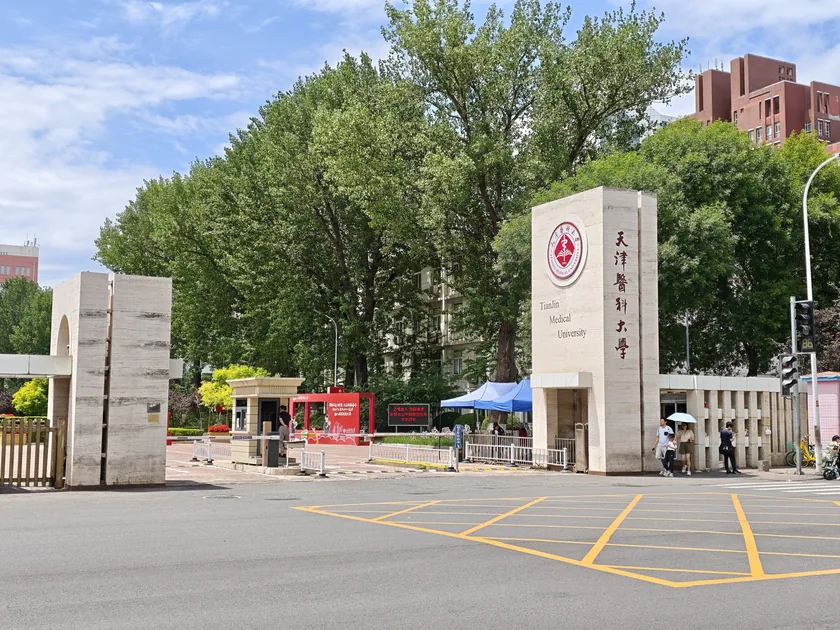
01OVERVIEW
Overview: Chase Global Success with MBBS in China
MBBS in China is the foremost destination for pursuing global education. According to the Ministry of Education (MOE) of the People's Republic of China, as of 2021, China leads the world in medical education capacity, with over 1.7 million students enrolled. The country's medical programs have also seen a significant influx of foreign talent, including more than 25,000 Indian students in recent years.
To enrol in the MBBS program in China, you need to meet the specified NMC eligibility criteria. The requirements include being 17 years of age, scoring 50-60% in 10+2 with PCB, and qualifying in NEET. Affordable tuition & WHO/NMC alignment are major reasons why Indian students choose China. The total 6-year MBBS course duration in Chinese universities costs only 30-40 Lakhs.
02AT A GLANCE
MBBS in China at a Glance
| Parameter | Details & Specifications |
|---|---|
| Course Duration | 6 Years, including 1 year of internship |
| Medium of Instruction | English (available at MOE-authorised universities) |
| Annual Tuition Fees | INR 3 lakh – INR 6 lakh per annum |
| Cost of Living | INR 1.5 lakh – INR 2.5 lakh per annum |
| Academic Intake | September and March are major Intakes |
| Global Recognition | WHO, NMC, ECFMG, MoE (China), FAIMER, and WDOMS |
| Academic Eligibility | Must be at least 17 years old 50-60% in 10+2 with PCB A valid NEET score |
| Entrance Exams | No specialised entry tests are required |
| NEET-UG Requirement | Mandatory for Indian students |
What does this mean for you: the degree is workable, but the timeline is a bit longer than in India. Budget 7 years from starting the degree to practising in India, not 5.5.
These are just general country facts. The only numbers you really need to look at are your own score and your budget.
03WHY CHINA
Why Indian Students Study MBBS in China
Indian students prefer MBBS in China primarily because of affordable tuition fees, English-taught programs, and globally competitive degrees. Below are the key benefits associated with benefits of studying medicine in China mentioned.
Affordable Cost
Medical education in China is more affordable than in India. The annual tuition fees for the MBBS program are $5,300/year. The total budget is around $31,500 to $42,000.
Easier Admission
Chinese universities admit applicants across the globe. You only need to meet the NMC eligibility criteria and follow each admission step carefully.
English-Medium Instruction
For Indian and international students, he primary medium of instruction is English. It removes the language barrier and improves the level of productivity & output.
Advanced Infrastructure
China offers advanced MBBS infrastructure featuring state-of-the-art digital anatomy labs, high-fidelity simulation centres, and modern research facilities.
Massive Clinical Exposure
China offers massive clinical exposure through its extensive network of affiliated Grade A hospitals, ensuring extensive hands-on training with diverse patient cases.
Global Recognition
China's WHO-approved MBBS programs offer global recognition, enabling graduates to clear international medical licensing exams and practice medicine worldwide.
04RECOGNITION
Is MBBS in China Valid in India?
Yes, an MBBS degree from China is valid in India, but only if you strictly follow the guidelines set by the National Medical Commission (NMC). It sets rules and regulations for Indian students willing to pursue MBBS in China or another foreign nation.
The Five NMC Conditions, Checked One by One
Minimum Duration
An MBBS course duration must include 4.5 years (54 months) of theoretical studies and 1 year (12 months) of clinical rotation from a recognised healthcare centre.
Medium of Instruction
The primary medium of instruction for an MBBS degree in Chinese universities must be in English; other native languages will not come under the guidelines.
Mandatory Subjects
As cited in “Schedule 1” of the NMC Gazette, an MBBS program must include all the essential medical subjects (over 19).
Validity of the Degree
The MBBS degree from medical universities in China must be verified as a “Primary Medical Qualification”, which will ensure degree validity globally.
1-Year Internship in India
During the course duration of an MBBS degree, a 1-year (12 months) clinical rotation is mandatory at a recognised university-affiliated hospital.
Medical Screening in India
Foreign Medical Graduates (FMGs) who want to practice medicine in India need to pass the mandatory licensing examination, such as FMGE or NExT.
Source: NMC (Foreign Medical Graduate Licentiate) Regulations, 2021. Binds students who joined on or after 18 November 2021. Read the full document.
What this means for you: Indian students need to navigate all the NMC requirements. 100% adherence to norms will ensure your eligibility to practice medicine in India and to sit for the FMGE or NExT screening test.
One condition we have not confirmed: Before making a final decision, you must verify university-specific medical registration eligibility directly on the official institution website and through the Chinese Medical Doctor Association (CMDA).
Do These NMC Rules Apply to You?
These rules only apply to students who joined on or after November 18, 2021. If you enrolled before this date, you follow the old rules. Please note that most publications show the new rules without mentioning this cutoff date, which can be confusing if you are already halfway through your degree.
The five NMC conditions, in the Gazette's own words
Here is a simplified, easy-to-understand breakdown of the mandatory conditions from the NMC Foreign Medical Graduate Licentiate (FMGL) Regulations, 2021
Will Your NEET Score Be Enough for China?
Medical universities in China generally require 50-60% marks in NEET-UG. Also, a NEET score is not mandatory to get into Chinese universities; it is only required for students who wish to return to India and practice medicine.
Not taken yet? Put in the score you expect — you can redo this later.
The PCB average, not your overall percentage.
Get your full report
- Your six-year cost in rupees, at today’s exchange rate
- The documents you need, and which need apostille
- Which recognised universities are worth your application
Your report is on the way.
A counsellor will go through it with you and answer anything the numbers leave open.
05ELIGIBILITY
MBBS in China Eligibility: Marks, Age and NEET
To apply for top-ranked Chinese universities, you need 100% adherence to the MBBS in China eligibility criteria. This will ensure that you are eligible for medical practice in India and registration with the state council. Key requirements include:
- Academic Background: The senior secondary education (10+2) of applicants must be in the Science stream; subjects include Physics, Chemistry, Biology, and English.
- Academic Qualifications: An aggregate of 50-60% in the 10+2 standard is required for general category students. In contrast, 40-45% is necessary for reserved candidates.
- Age Limit: Applicants must be at least 17 years old as of 31st Dec of the admission year. Also, there is no upper age limit for applying to MBBS in China for Indian students.
- NEET Qualifications: Indian applicants must qualify for the NEET (National Eligibility cum Entrance Test). It ensures their eligibility to practice medicine in India.
- Documentation: Applicants need to provide a set of documents for their admission. The documents include academic transcripts, passport, photographs, medical reports, etc.
You are eligible to apply as long as you meet the above conditions. You only require qualifying NEET scores; high cutoffs are generally not needed.
Meeting the criteria is one thing. But identifying the institutions that recognise your grade takes extra work.
06ADMISSION
MBBS Admission in China, Step by Step
- Expert Counselling Session Your medical career in China will begin with an expert counselling session. This discussion will include your career plans, objectives, and academic goals. After that, our experts will let you know about all the information related to MBBS in China.
- Profile Evaluation and Shortlisting We will evaluate your profile based on your academic qualifications (10+2), NEET score, overall budget, and personal preferences. After evaluating your profile, our expert counsellor will shortlist the best universities that are ideal for you.
- Online Application Submission Your application submission and other paperwork will be handled by our experienced team. We will submit your application, attested with all the supporting documents, to the shortlisted universities.
- Accept the Admission Letter After a successful review of your application, the university will send you an admission letter via email. To secure your MBBS seat at the university, you need to confirm your acceptance via email by accepting the admission letter.
- Document Legalisation for Visa Your acceptance via email will ensure your availability for the MBBS degree at the shortlisted university. The university will officially process your visa invitation. Simultaneously, we will apostille your documents and transcripts with the MEA.
- Visa Application Process For your visa application, our team will provide you with end-to-end support. Likewise, we will assist with compliance with the Ministry of Education (MoE) in China. We will ensure a smooth and hassle-free transition for your medical journey.
- Pre-Departure Preparation After all the verification and documentation procedures, you will receive a sticker visa from the Chinese Consulate (or Embassy) in India. We will undertake your pre-departure preparations, equipping you with the necessary checklists.
- Post-Arrival Support You are now all set; just take your flight tickets and fly to China. We have a dedicated team for local support, who will further assist you after picking you up at the airport. They will guide you through all the necessary arrangements and accommodations.
Before anything is submitted anywhere
- We check your marks against the NMC rules first.
- You get the full six-year cost, not a first-year figure.
- Nothing goes to a university without your say-so.
07INTAKES
MBBS in China Admission Intakes and Deadlines
China generally offers two intakes for international students, which are September and March. Below is the proper timeline mentioned.
September
Primary Intake (Recommended)
- Application Period
- June – July
- Visa & Pre-Departure
- August - September
- Application Processing
- July – August
- Classes Begin
- September - October
March
Secondary Intake (Optional)
- Application Period
- November – December
- Visa & Pre-Departure
- January – February
- Application Processing
- December– January
- Classes Begin
- March
What this means for you: It's advised that you apply early, mainly in September (Fall). As most of the seats are full in this intake, only a few seats are vacant in the March intake.
08PAPERWORK
Documents Required for MBBS in China
Documentation is one of the crucial parts. Properly organised paperwork will remove potential delays and pendencies. The core documents include academic transcripts, medical certificates, visa copies, NEET scorecard, etc. Below are the vital documents mentioned for Indian applicants.
- 10th and 12th marksheets
- Valid passport
- Passport photographs
- NEET scorecard
- Foreigner Physical Examination Form
- Non-criminal record certificate
- JW202 form
- X1 student visa
- University admission letter
- MEA apostille of academic documents
What this means for you: Organise and gather all the scanned copies of your vital documents for your application and visa process. It will remove potential delays and pendencies in the overall review process.
Send us what you already have, and we will tell you what is missing.
09UNIVERSITIES
NMC Approved Medical Colleges in China
China stands out as a major global centre for medical training, featuring dozens of Ministry of Education (MOE) approved schools for an MBBS Degree. You can pick from over 45+ MOE-listed medical universities in China.
The MBBS program at Chinese universities is well aligned with the National Medical Commission (India) standards and meets global standards of medical education, providing an opportunity for global medical practice. Below are the top MOE-listed medical universities in China mentioned.
MOE Listed Medical Colleges in China, Campus by Campus
These ten universities are the top-searched options for Indian students. The listed tuition fees cover classes only. You can find the breakdown for housing, visas, insurance, and personal expenses in the separate fees section.

01Jilin University
Changchun, Jilin
- Established
- 1946
- Seats
- 80 per year
- Tuition
- ¥36,000/year
- Course
- 5 + 1 years
- Taught in
- English
- Intake
- September
- FMGE pass rate
- 0.00%
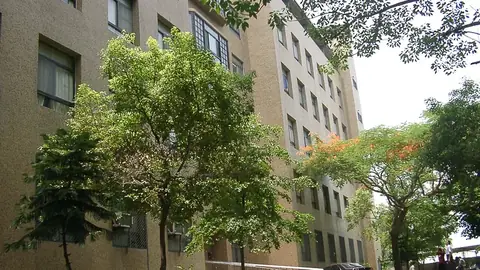
02China Medical University
Shenyang, Liaoning
- Established
- 1931
- Seats
- 100 per year
- Tuition
- ¥40,000 / year
- Course
- 5 + 1 years
- Taught in
- English
- Intake
- September
- FMGE pass rate
- 13.30%
03Dalian Medical University
Dalian, Liaoning
- Established
- 1947
- Seats
- 100 per year
- Tuition
- ¥45,000 / year
- Course
- 5 + 1 years
- Taught in
- English
- Intake
- September
- FMGE pass rate
- 3.03%
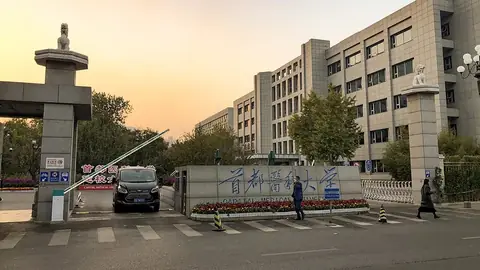
04Capital Medical University
Beijing
- Established
- 1960
- Seats
- 100 per year
- Tuition
- ¥50,000/year
- Course
- 5 + 1 years
- Taught in
- English
- Intake
- September
- FMGE pass rate
- 10.59%
05Tianjin Medical University
Tianjin
- Established
- 1951
- Seats
- 100 per year
- Tuition
- ¥48,000/year
- Course
- 5 + 1 years
- Taught in
- English
- Intake
- September
- FMGE pass rate
- NA
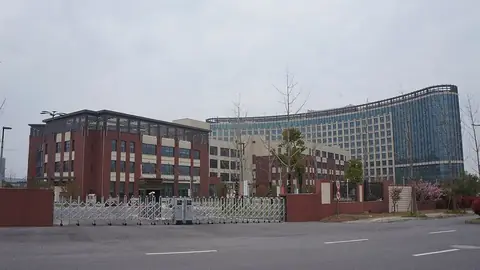
06Nanjing Medical University
Nanjing, Jiangsu
- Established
- 1934
- Seats
- 100 per year
- Tuition
- ¥34,000/year
- Course
- 5 + 1 years
- Taught in
- English
- Intake
- September
- FMGE pass rate
- 34.09%
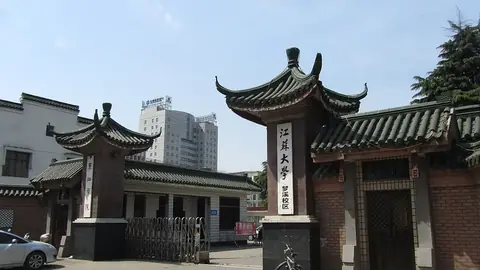
07Jiangsu University
Zhenjiang, Jiangsu
- Established
- 2001
- Seats
- 100 per year
- Tuition
- ¥34,000/year
- Course
- 5 + 1 years
- Taught in
- English
- Intake
- September
- FMGE pass rate
- 20.00%
08Wenzhou Medical University
Wenzhou, Zhejiang
- Established
- 1958
- Seats
- 150 per year
- Tuition
- ¥33,000 / year
- Course
- 5 + 1 years
- Taught in
- English
- Intake
- September
- FMGE pass rate
- 37.97%
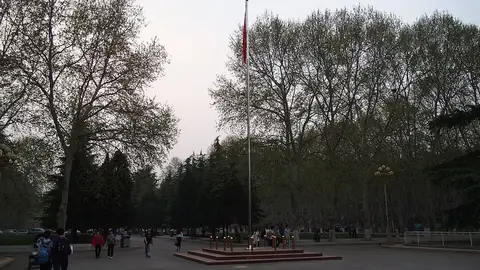
09Zhengzhou University
Zhengzhou, Henan
- Established
- 1956
- Seats
- 20 per year
- Tuition
- ¥35,000 / year
- Course
- 5 + 1 years
- Taught in
- English
- Intake
- September
- FMGE pass rate
- 9.95%
10Xuzhou Medical University
Xuzhou, Jiangsu
- Established
- 1958
- Seats
- 60 per year
- Tuition
- ¥33,000/year
- Course
- 5 + 1 years
- Taught in
- English
- Intake
- September
- FMGE pass rate
- 11.83%
Note: University founding years have been verified directly against their official websites. Seat counts are sourced from the official Ministry of Education notice. Tuition fees, where provided, reflect publicly available data; please confirm the exact costs directly with the university before finalising your budget.
Top Medical Universities in China: The Full List →
Not sure which of these fits your score and your budget?
10FEES
MBBS in China Fee Structure
Studying for an MBBS degree in China offers an affordable alternative to Indian private medical colleges, with a total estimated 6-year expense ranging from INR 20 Lakhs to INR 40 Lakhs. A dedicated table related to the MBBS in China fee structure is crafted below.
University-wise MBBS in China Fees, Year by Year
| University Name | City | Avg. Annual Tuition Fee | Avg. Annual Hostel Fee | Full 6-Year Tuition Fee |
|---|---|---|---|---|
| Jilin University | Changchun | ¥36,000/year | ¥7,200/year | ¥216,000 |
| China Medical University | Shenyang | ¥40,000/year | ¥7,000/year | ¥240,000 |
| Dalian Medical University | Dalian | ¥45,000/year | ¥8,000/year | ¥270,000 |
| Capital Medical University | Beijing | ¥50,000/year | ¥7,500/year | ¥300,000 |
| Tianjin Medical University | Tianjin | ¥48,000/year | ¥11,520/year | ¥288,000 |
| Nanjing Medical University | Nanjing | ¥34,000/year | ¥6,000/year | ¥204,000 |
| Jiangsu University | Zhenjiang | ¥34,000/year | ¥4,900/year | ¥204,000 |
| Wenzhou Medical University | Wenzhou | ¥33,000/year | ¥4,400/year | ¥198,000 |
| Zhengzhou University | Zhengzhou | ¥35,000/year | ¥5,000–¥10,000/year | ¥210,000 |
| Xuzhou Medical University | Xuzhou | ¥33,000/year | ¥4,600/year | ¥198,000 |
Note: Figures are estimated totals for 6 years of tuition based on official university websites and third-party sources. They exclude additional costs like travel, visas, insurance, and personal expenses. For the most accurate values, always check the latest university prospectus and use a live currency converter.
Other Costs on Top of Tuition
| Expense Category | Avg. Value in CNY | Avg. Value in INR |
|---|---|---|
| Medical Insurance | ¥800/year | ₹11,400/year |
| Admission/Application Charges | ¥600–¥800 | ₹8,600–₹11,400 |
| Air Travel (6 Years) | ¥24,000–¥36,000 | ₹3.43–₹5.15 lakh |
| Study Visa Charges | ¥210–¥350 per application | ₹3,000–₹5,000 |
Note: Figures are estimated values based on internal and third-party sources combined. The values are subject to change and will vary depending on the exact institution and other relevant factors. The currency exchange rate used for INR values is ¥1 = ₹14.31.
Most families fund the education with a loan against an NMC-recognised seat.
Cost of Living in China for Indian Students
The monthly cost of living in China for Indian students typically ranges from ₹25,000 to ₹50,000 (approx. ¥2,200 to ¥4,300), depending heavily on the city & accommodation. Below is a dedicated table for the cost of living in China.
| Expense Category | Avg. Value in CNY | Avg. Value in INR |
|---|---|---|
| Private Accommodation (Per Month) | ¥1,600–¥2,500 | ₹22,900–₹35,800 |
| Local Transport (Per Month) | ¥150–¥300 | ₹2,100–₹4,300 |
| Personal Expenses (Per Month) | ¥300–¥600 | ₹4,300–₹8,600 |
| Food or Groceries (Per Month) | ¥800–¥1,200 | ₹11,400–₹17,200 |
| Utilities (Per Month) | ¥300–¥450 | ₹4,300–₹6,400 |
Note: Figures are estimated values based on internal and third-party sources combined. The values are subject to change and will vary depending on the exact location, habits, and other relevant factors. The currency exchange rate used for INR values is ¥1 = ₹14.31.
What this means for you: Treat tuition fees and living expenses as a combined annual figure & convert the final cost to INR using a standard exchange rate for your budget.
11FUNDING
Scholarships for MBBS in China
Indian students pursuing an MBBS in China can access several types of government, provincial, and university-specific financial aid. Chinese universities provide aid options to students who are not well off financially. Each scholarship has its own eligibility criteria and requirements; you need to strictly adhere to them.
Government Scholarships
Chinese Government Scholarship (CSC) and Bilateral Program (CGS-Bilateral).
University Scholarships
Zhengzhou University President Scholarship, Nanjing Medical University Scholarship, and President's Scholarship.
What they typically cover: The aid options commonly cover tuition fees, housing, and medical insurance, though full coverage depends on the specific program.
What this means for you: When planning your MBBS in China, ensure your core budget is fully prepared to cover all daily living expenses independently. Approach your financial strategy with the mindset that scholarships or tuition discounts are strictly a helpful bonus rather than the foundation of your plan.
12FUNDING
Education Loan for MBBS in China
Due to the limited flexibility of studying medicine in China, Indian students can fund their education through student loans offered by multiple Indian financial institutions and NBFCs.
What banks ask for
Proof of admission to a recognised Chinese institution, a detailed MBBS in China fee structure, co-applicant’s income proof, collateral (if required), and KYC paperwork.
What a loan usually covers
Tuition fees, hostel or accommodation costs, exam & visa charges, airfare, and coverage for basic living expenses, depending on the sanction letter.
What to check before signing
Interest rate, moratorium period, currency of disbursement, margin money requirements, total repayment over 7-10 years and the impact of exchange rate fluctuations.
13COURSE
MBBS in China Duration and Year-Wise Syllabus
MBBS in China is 6 years long, comprising 5 years of academic studies and 1 year of clinical practice at university-affiliated hospitals. The program is taught entirely in English, fully aligned with the National Medical Commission (NMC) norms, and meets global standards of medical education. The course duration is divided into 3 phases, i.e. pre-clinical, para-clinical, and clinical. Also, it includes all the mandatory subjects (over 19) prescribed in the NMC Gazette.
What is non-negotiable here for NMC compliance: the taught course must run for at least 54 months, the whole thing must finish within ten years of joining, and the internship must be completed at the same institution abroad.
Course length varies by university, and it determines whether your degree satisfies the 54-month rule.
Medium of Teaching
MBBS in China is taught entirely in English for international students. The curriculum is fully aligned with the NMC norms, and it states that “Under the head 4(a)(iii) of the NMC Gazette, foreign medical programs must be taught in English.”
What this means for you: Prioritise learning and practising the local language outside of your classroom. To build strong communication skills, actively speak the language with your Chinese batchmates, local neighbours, and patients.
Being verified per university: Which listed universities require English-language certification, at what level, and by which year.
Language is the thing graduates most often say they underestimated.
Curriculum Highlights
The whole course duration (6 years) is divided into 12 semesters and 3 phases, which are pre-clinical, para-clinical, and clinical.
Years 1 - 2 – Pre-Clinical
- Human Anatomy
- Histology and Embryology
- Physiology
- Biochemistry
- Medical Biology
- Medical Chemistry
- Chinese Language (Basic)
- Medical Ethics
- Computer Basics
Years 3 - 4 – Para-Clinical
- Pathology
- Pathophysiology
- Pharmacology
- Microbiology
- Immunology
- Parasitology
- Epidemiology
- Community Medicine
- Diagnostics
- Introduction to Clinical Medicine
Years 5 - 6 – Clinical
- Internal Medicine
- General Surgery
- Pediatrics
- Obstetrics and Gynaecology
- Orthopedics
- Neurology
- Psychiatry
- Dermatology
- Ophthalmology
- Otorhinolaryngology (ENT)
- Emergency Medicine
- Clinical Internship / Hospital Training
14COMPARISON
MBBS in China vs India and Other Countries
| Feature | China | India | Russia | Georgia |
|---|---|---|---|---|
| Duration | 6 Years | 5.5 Years | 6 Years | 6 Years |
| Total Cost | Moderate | Varies | Moderate | Moderate |
| Teaching Language | English/Chinese | English/Regional | English/Russian | English |
| Entrance Requirements | NEET-UG | NEET-UG | NEET-UG | NEET-UG |
| To Practise In India Rules | FMGE/NExT | NMC Registration | FMGE/NExT | FMGE/NExT |
Note: All values are estimated and will depend on the actual institution and other relevant factors. The duration of the programmes can vary across the institutions but must meet the NMC guidelines if seeking practice in India. Entrance requirements will vary depending on the university’s regulations. All classes are conducted in English, but they teach the local language to prepare for patient interactions. NExT is not officially implemented in India.
What does this mean for you: Compare China against other countries based on recognition, language, and overall cost in Indian rupees; the licensing exam in India stays the same.
The right comparison is against other countries; your score actually opens.
15AFTER GRADUATION
Career Pathways After MBBS in China
Graduation is not the last step, as practising medicine in India requires passing the FMGE or NExT and finishing an extra one-year internship domestically, regardless of any clinical training already finished abroad.
Step1
Complete your Bachelor of Medicine and Bachelor of Surgery (MBBS) degree from a recognised Chinese medical university.
Step 2
Clear the mandatory screening test in India, which is currently the FMGE (Foreign Medical Graduate Examination) or the future NExT (National Exit Test).
Step 3
After qualifying, you need to complete 1 year of mandatory internship in India, on top of the internship you already did in China.
Step 4
Within 2 years of passing the licensing examination, apply for permanent registration to practice medicine in India.
A constraint no other page mentions
Regardless of the career you choose, practising legally in any country requires following the same fundamental pathway: meeting and clearing all local licensing and regulatory requirements.
What this means for you: A 6-year medical education is just the first step to practising medicine. Students must also navigate distinct international licensing processes.
These are the rules as written, not a sales pitch. Ask before you commit six years.
A Chinese MBBS opens multiple routes for medical graduates. Below are some of the most suitable career pathways mentioned.
Coming Back to Practise in India: FMGE and NExT
Returning to India to practice medicine after completing an MBBS in China requires passing the mandatory licensing examination. Currently, the Foreign Medical Graduate Examination (FMGE) or the future National Exit Test (NExT) has been deferred by the National Medical Commission (NMC).
Staying On in China
Staying on and practising medicine in China after completing an MBBS is possible, but it is rare, highly competitive, and requires meeting strict language and licensing hurdles. You need to pass the licensing examination, which is the National Medical Licensing Examination (NMLE).
Moving to the EU, UK or US
To move after a Chinese MBBS, you must pass licensing exams: USMLE for the US, PLAB/UKMLA for the UK, or local language and medical exams for the EU. Afterwards, you can apply for residency or training positions to practice medicine.
16THE OTHER SIDE
Pros and Cons of Studying MBBS in China
| Pros (Advantages) | Cons (Disadvantages) |
|---|---|
| Affordable Fees: Tuition costs are much lower than private medical colleges in India or Western nations. | Language Barrier: Daily life and clinical/patient interactions require learning basic Mandarin. |
| English-Taught Programs: Core medical courses are instructed in English for international students. | Licensing Exams: Graduates must clear screening exams like FMGE/NExT to practice in India. |
| Modern Infrastructure: Universities feature high-tech labs, advanced medical technology, and good campus facilities. | Clinical Limitations: Direct hands-on patient contact during internships can be restricted compared to home countries. |
| Global Recognition: Degrees are recognised by the WHO and the National Medical Commission (NMC). | Cultural Adjustment: Adapting to local food, social norms, and living environments can be challenging initially. |
Why we publish this: Websites providing information on this section highlight the upside but rarely reflect on the realistic aspects. Showing pros and cons can help you make a better and more informed decision.
Still weighing it up? Ask the awkward questions before you commit, not after.
17FAQ
MBBS in China FAQs
Is MBBS in China valid in India for Indian students?
Yes, a medical degree from China is valid in India, but the foreign medical graduate must meet the applicable NMC requirements & complete the required screening process before practising medicine in India.
What is the total cost of MBBS in China for Indian students?
The cost varies by university and city. For many universities, tuition is around ¥30,000–¥50,000 per year, while hostel charges vary by campus and room type. Over six years, tuition alone can therefore be approximately ¥180,000–¥300,000.
Is NEET compulsory for MBBS in China?
Yes. Indian students who want to study medicine abroad must qualify NEET-UG as required under Indian regulations. NEET qualification is also relevant when seeking eligibility to practise in India after completing a foreign medical qualification.
What are the eligibility requirements for MBBS in China?
Generally, Indian applicants need to have completed Class 12 with Physics, Chemistry and Biology, satisfy the applicable NEET requirement, and fulfil the age requirement, which is a minimum of 17 years.
What is the duration of MBBS in China?
The MBBS programme in China is generally 6 years, including classroom and clinical training. It comprises 5 years of theory and 1 year of clinical practice.
Do Indian students need to learn Chinese for MBBS in China?
Basic Chinese is required as part of the curriculum, particularly for communication with patients during clinical training.
Which are the best medical universities in China for Indian students?
China has several established medical universities offering English-taught medical programmes, including Jilin University, China Medical University, Dalian Medical University, Capital Medical University, Tianjin Medical University, Nanjing Medical University, Jiangsu University, Wenzhou Medical University, Zhengzhou University and Xuzhou Medical University.
What is the FMGE pass rate for Indian students who studied MBBS in China?
There is no single FMGE pass rate for all Chinese medical universities. NBEMS publishes session-wise, institute-wise FMGE performance, so the percentage can differ substantially between universities and examination sessions.
Can I study MBBS in China without IELTS?
Yes, you can study MBBS in China without an IELTS or TOEFL score, as most Chinese medical universities do not require official English proficiency test certificates for admission.
How can I apply for MBBS admission in China from India?
The usual process involves shortlisting a university, checking eligibility, preparing academic and identity documents, submitting the application, receiving an admission offer, completing the required university/visa formalities and applying for the appropriate Chinese student visa. Indian students should also verify the programme's compliance with the NMC regulations applicable to foreign medical graduates before paying fees.
18ASK US
Ask a Question About MBBS in China
Spot anything on this page you want to cross-check with your scores, budget, or shortlist? Go right ahead! It’s 100% free, and there is zero pressure to apply through us or anyone else.
Thank you! We have your details.